Data methods
Powerball Data Methodology: Sources, Validation, and Counting
By MyBallWin · Reviewed · 3 min read
Reliable lottery analysis begins with verified drawing records and an explicit window. Check dates, unique white balls, valid ranges, duplicate rows, and source coverage before calculating. Count white balls separately from the red Powerball, and never treat missing records as completed drawings.
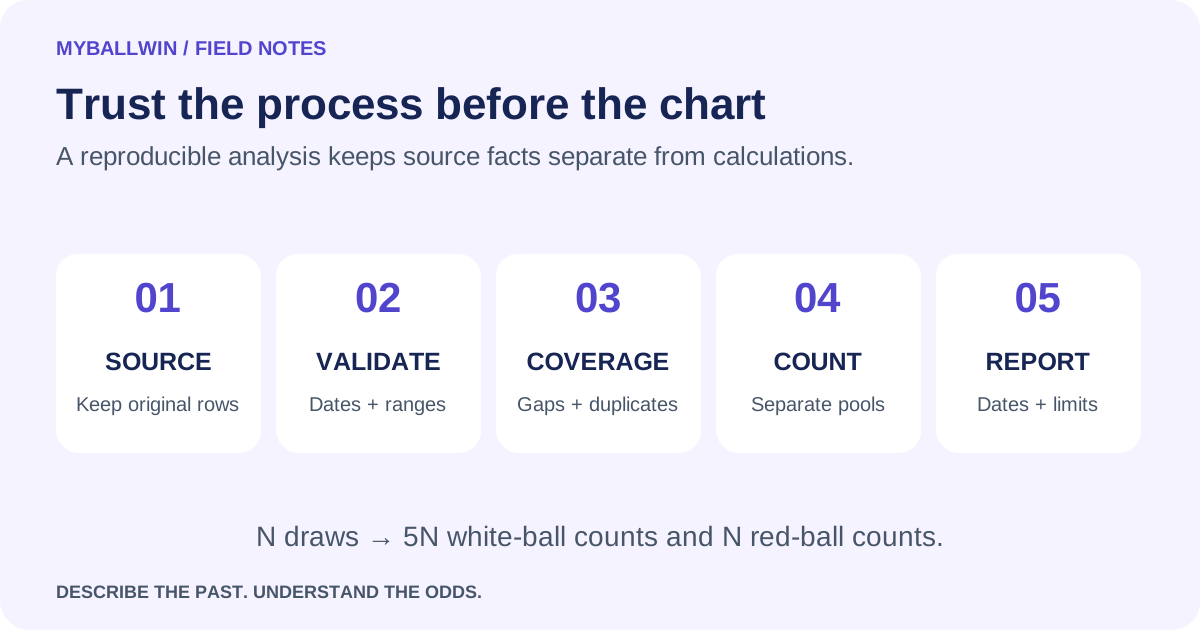
How MyBallWin prepares its published data
Our update pipeline imports the New York State Open Data Powerball dataset and keeps current-format drawings from October 7, 2015 onward. It validates the rows and derives the 100-draw, 200-draw, and full-archive statistics from the same records. The HTML and browser interface use the same published snapshot; new source results become visible after a successful data update, rebuild, and deployment.
The latest draw date identifies the newest drawing in that snapshot, not the download time. Frequency counts and rates use the selected window's actual draw count. The overdue table is calculated from the full archive, with zero meaning present in the latest draw, and does not change with the frequency window. Sum-range summaries use fixed 20-point inclusive bins, such as 160–179.
Keep source facts separate from calculations
MyBallWin provides an independent interface for exploring draw history and descriptive statistics. The official Powerball result remains the authority for a drawing. When auditing our data or your own copy, retain the source URL and retrieval time beside the original records. Derived values such as sums, frequencies, and last-seen gaps should be reproducible from those records rather than entered as unsupported facts.
For each current-format record, verify a usable draw date, exactly five distinct integer white balls from 1 through 69, and one integer red Powerball from 1 through 26. A numeral may appear in both pools. The red value, any multiplier, and the five white values belong in separate fields. Older rule eras require their own range checks.
Audit coverage before describing a period
Sort records by draw date and check for duplicate game/date keys. Identical duplicate rows can inflate counts; conflicting rows require comparison with the official archive. Unexpected gaps should be investigated and reported. An unavailable record is not a draw with zero appearances, and a future scheduled date is not yet a completed result.
A summary should disclose the earliest and latest included dates and the actual number N of verified drawings. White-ball counts must add to 5N, while red-ball counts must add to N. A number's per-draw appearance rate is its count divided by N. A zero means the number did not appear in the available valid rows, not that it has never appeared in all lottery history.
Publish the limits with the result
State how filters, ties, and last-seen gaps are handled. If a number is absent throughout a finite window, its precise earlier last-seen date is unknown from that window alone. If periods have different draw counts, compare normalized rates. If they overlap, do not treat agreement between their summaries as independent confirmation.
These steps describe a reviewable methodology, not a claim that every external feed is always complete or instantly updated. Cross-check any record that matters to a ticket inquiry with the selling lottery. Statistical summaries on MyBallWin describe available history; they are not forecasts, ticket validation, or evidence that past patterns improve future winning chances. A transparent limitation is more useful than a precise-looking count built on uncertain data.
Official sources
Game rules and archive references checked October 3, 2026. Calculations and examples are MyBallWin explanations based on the stated assumptions.