Statistics explained
Are Overdue Powerball Numbers More Likely to Appear?
By MyBallWin · Reviewed · 2 min read
No. Overdue usually means many drawings have passed since a number last appeared. It measures a historical gap. Under independent drawings, that gap does not increase the number's probability on the next drawing.
Count gaps consistently
A common convention assigns a gap of zero to a number present in the newest available draw, one to a number last present in the preceding draw, and so on. State the convention because some interfaces count the latest draw as one instead. Also show the newest drawing date: a stale dataset can make an apparently precise gap misleading.
A number not found anywhere in a limited archive should be marked not seen in this dataset, or with a lower bound on its gap. It should not receive a fabricated exact last-seen date. For example, 30 consecutive absent records establish a gap of at least 30, but they do not reveal how long the absence began before those records.
Calculate the probability of a gap
For one fixed white-ball number, the chance of being absent in a fair drawing is 64/69. Assuming independent drawings, the chance it is absent for 30 consecutive draws is (64/69)^30, approximately 10.5%. That probability refers to one number and a specified sequence of 30 draws, not to the probability that any number anywhere in the archive has such a gap.
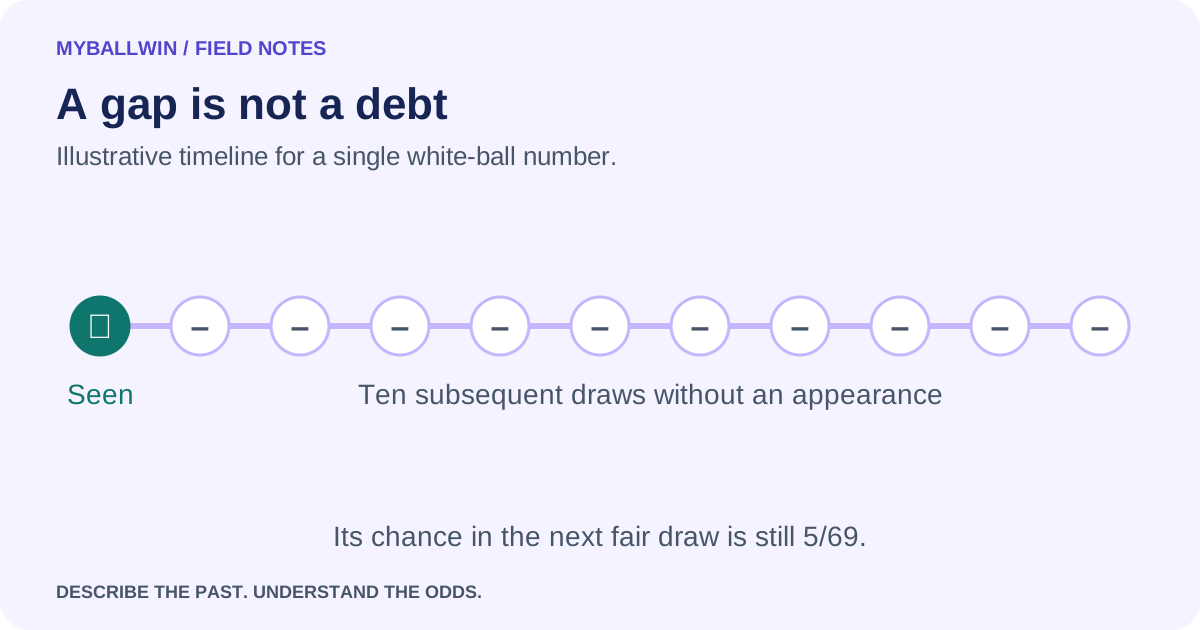
Once the 30 absences have happened, the chance that this number appears next is still 5/69. This is a conditional-probability distinction: a long sequence may have been uncommon in advance, but its completed history does not need to be balanced by the next event. The drawing does not keep a ledger that must repay missed appearances.
Interpret the longest gap carefully
Looking across all 69 white balls gives many opportunities to find a long absence. Looking across years gives even more. A single striking maximum therefore deserves different interpretation from a gap specified before collecting data. Red-ball gaps need their own calculation because the red pool has a different size and supplies only one number per drawing.
A recency table is useful when you want to understand the archive, identify missing records, or compare historical stretches. Read it beside the frequency counts: two numbers can have the same total count but different last-seen dates. Neither statistic supplies a forecast. Keep gap analysis descriptive and verify the underlying drawing dates before drawing conclusions about the data itself.
Official sources
Game rules and archive references checked October 3, 2026. Calculations and examples are MyBallWin explanations based on the stated assumptions.